
Booking pest control for the first time can feel like a bit of a leap into the unknown. Do you have to clear out of the house? Is it actually safe around the kids and the dog? And what even happens once the technician’s through the door? If you’ve been putting it off partly because you’re not totally sure what you’re signing up for, this’ll walk you through the lot.
So here’s what actually happens during a professional pest control visit, from the knock on the door right through to the follow-up. No nasty surprises on the day. Think of it as a quick look behind the scenes at how decent pest control services in Canberra really work.
First Things First: It Starts Before Anyone Turns Up
Good pest control kicks off with a chat, not a spray can. When you get in touch, you’ll usually get asked a few things: what you’ve been seeing, where, how long it’s been going on, and whether anyone in the house has allergies or sensitivities. The pets and the little ones get factored in right from the start.
And that matters, because the right treatment hangs entirely on the pest. Sorting out cockroaches is a totally different job to dealing with spiders, ants or rodents, so nailing down what you’re actually up against shapes everything after it.
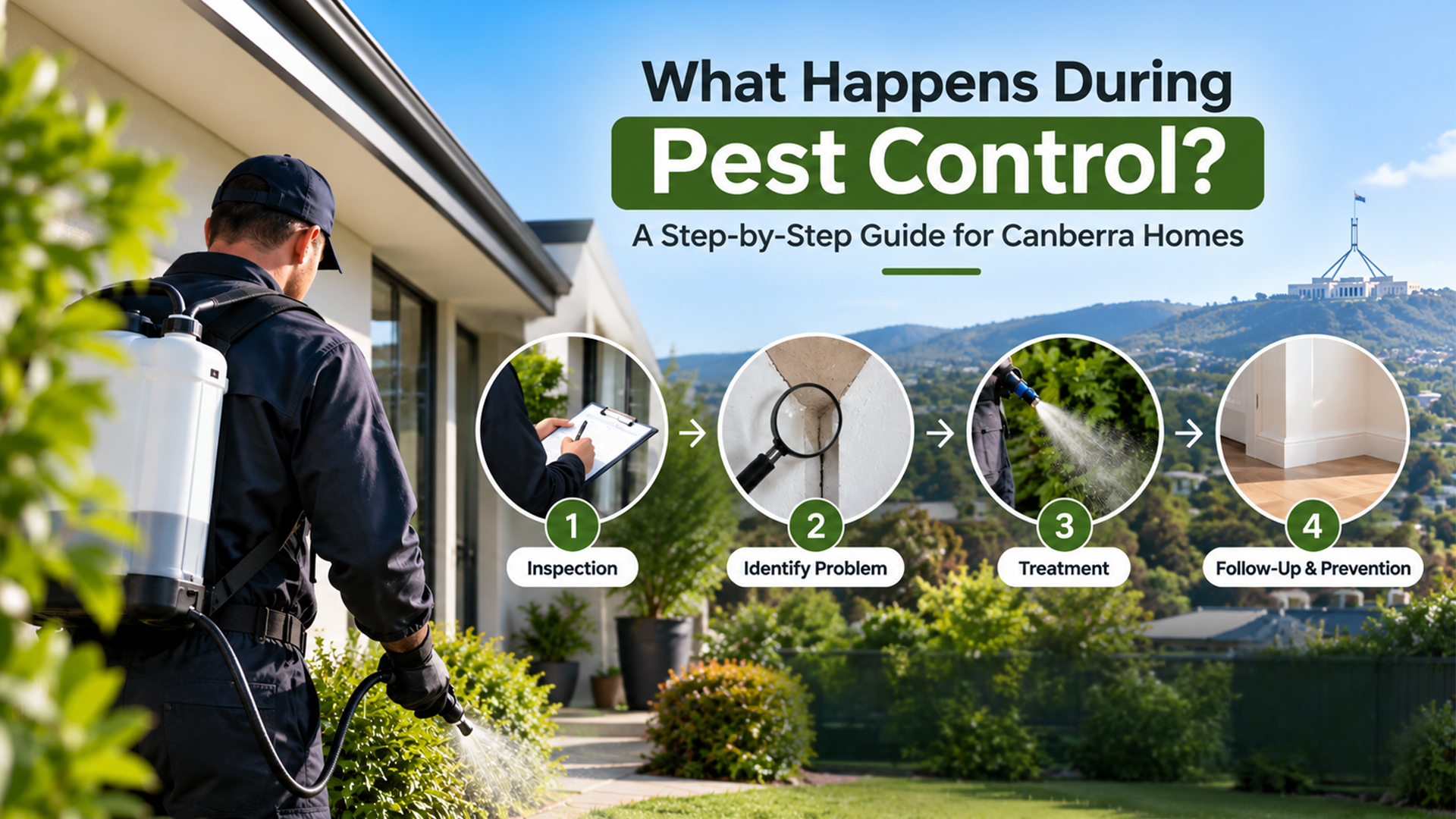
Step 1: The Inspection
Every proper job starts with a thorough inspection, and honestly, this is the bit that separates a real treatment from someone just wandering about with a sprayer.
A licensed technician goes over the inside and outside of your home, hunting for live pests, droppings, nesting spots, damage, and the entry points letting them in. They’ll zero in on the usual trouble spots: the kitchen, bathroom, laundry, subfloor, roof void, and around the outside where the building meets the garden. The point isn’t just to find the pests you’ve already spotted. It’s the ones you haven’t, plus whatever’s drawing them in.
For most homes the inspection takes anywhere from twenty minutes to an hour-ish, depending on how big the place is and how much is going on.
Step 2: Working Out What You’re Dealing With
Once the inspection’s done, the technician figures out exactly what’s going on: the type of pest, how established it is, and where it’s coming from.
This is more important than it sounds. Getting the ID right is the whole difference between a treatment that actually works and one that knocks over what you can see while the real population just carries on out of sight. It’s also, frankly, why the supermarket sprays let people down so often. They go after the symptom, not the source.
Step 3: The Treatment
Right, the actual work. A good technician doesn’t just blanket-spray the joint and call it a day. Modern pest control takes an integrated approach, matching the method to the pest and hitting the spots where it’ll do the most good, while keeping it well clear of your family and pets.
Depending on what you’ve got, treatment might involve:
- Targeted sprays along skirting boards, entry points, cracks and around the outside perimeter.
- Baits and gels, which work a treat for cockroaches and ants, tucked away where the pests actually travel.
- Traps or stations for rodents, set up safely out of reach.
- Dusting in roof voids and wall cavities for the spots you can’t easily get at.
- Mechanical fixes, like flagging or sealing up gaps and entry points so the pests can’t just stroll back in.
The treatment itself usually runs somewhere between thirty minutes and a couple of hours, again down to the size of the home and how bad the problem is. Our cockroach treatment in Canberra, for instance, is built to reach the whole population rather than just the few roaches you happen to catch scuttling off.
Step 4: The Advice, and Sometimes a Report
A good technician won’t just treat the place and vanish. Before they head off, they’ll run you through what they found, what they did, and what you can do to stop it coming back: seal the gaps, sort out the damp spots, tidy away the food sources, that kind of thing.
For the bigger jobs, or something like a termite inspection, you might also get a written report laying out the findings and recommendations. Worth hanging onto that one.
Is Pest Control Safe for Kids and Pets?
This is the question we get asked most, and it’s a fair one. Reputable pest control uses products that are safe when they’re applied properly by a trained, licensed technician. They know how much to use, where to put it, and just as importantly, where not to.
You’ll usually be asked to keep the kids and pets away from treated areas for a little while as things dry, and the technician will tell you exactly how long before it’s fine to carry on as normal. At City Pest Control Services, our treatments are family and pet friendly, and we’re more than happy to talk through any specific worries before we get started. You can read a bit more about our accredited team and the standards we hold ourselves to.
After the Treatment: What to Expect
Here’s the one that catches people out: you might actually see more pest activity for a few days afterwards, not less. That’s normal, and weirdly, it’s a good sign. It usually means the pests are being flushed out of their hidey-holes and running straight into the treatment. So give it a bit of time to do its thing before you decide whether it’s worked.
For a result that lasts, prevention and the odd follow-up go a long way. Plenty of Canberra homes do well on a regular schedule, often yearly, or more often for the stubborn pests or higher-risk properties. And decent treatments come with a warranty, so if the problem crops up again within the covered period, the technician comes back out.
Frequently Asked Questions
How long does pest control take? Most home visits run between thirty minutes and two hours, depending on the size of your place and the type and severity of the infestation. Your technician can give you a better idea once they’ve had a look around.
Do I need to leave the house during pest control? Usually not for a standard treatment, though you might be asked to steer clear of certain treated areas for a short while as they dry. For the bigger or more specialised jobs, the technician will let you know ahead of time if you need to be out.
How often should I get pest control done? For most Canberra homes, a yearly general treatment does the trick. Homes with a history of pests, or ongoing issues like cockroaches or rodents, might need more frequent visits.
Why am I seeing more pests right after treatment? Common, and usually a positive. The treatment tends to drive pests out of hiding, so you may notice a bit more activity for a few days before the numbers drop off.
The Bottom Line
Honestly, there’s nothing to dread about a pest control visit. It’s a pretty straightforward run of things: a proper inspection, the right ID, a targeted treatment, and clear advice on keeping the problem away, all handled by a licensed pro who knows exactly what they’re doing.
If pests have made themselves a bit too comfortable, or you’d just like the peace of mind of a professional check, City Pest Control Services provides safe, effective pest control services in Canberra and Queanbeyan. Get in touch for a free quote and we’ll take it from there.