
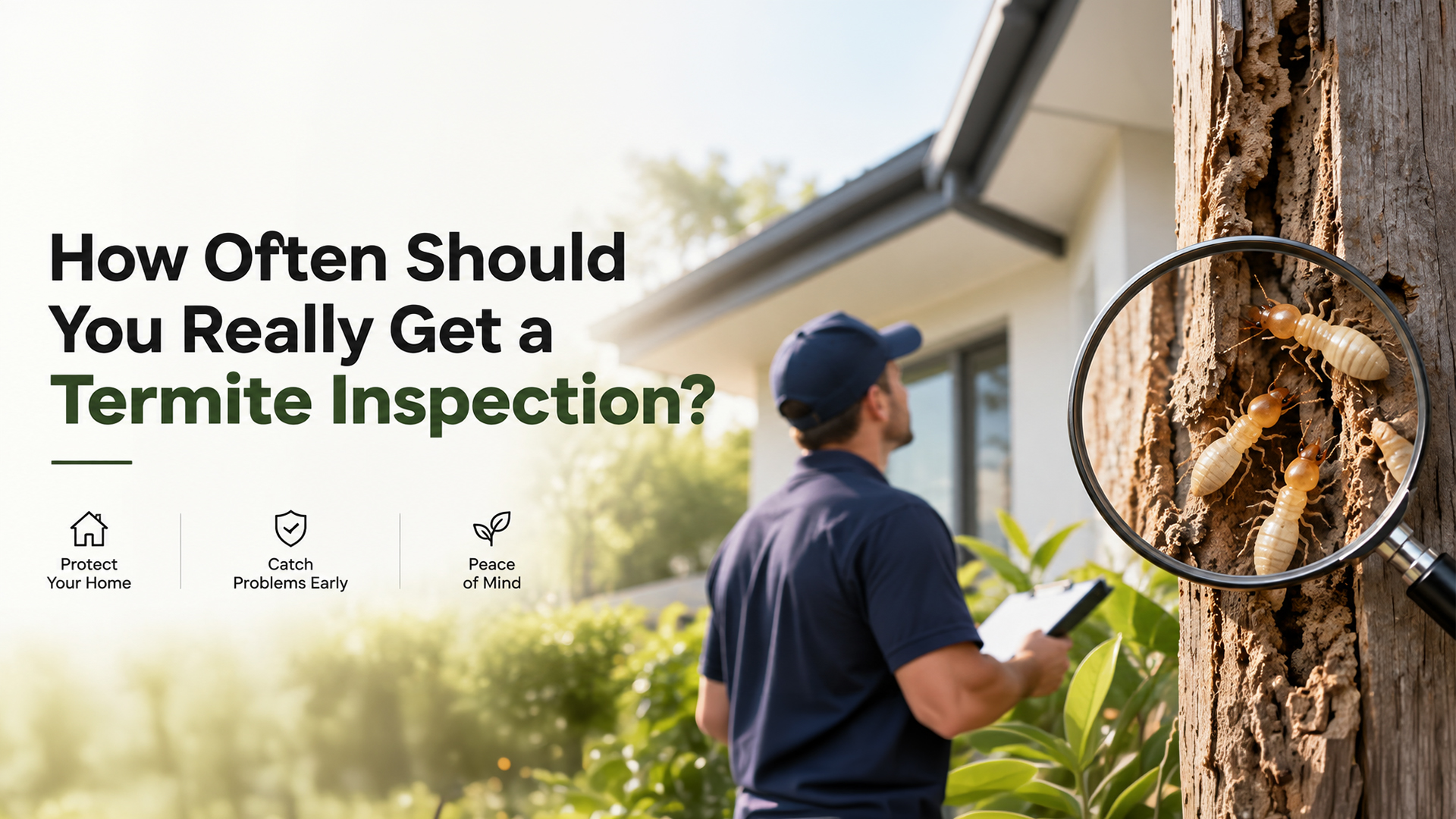
Termites are one of those problems you just don’t see coming, and I mean that literally. They quietly munch away inside your walls and floors, and by the time anything obvious shows up, the damage is usually well and truly underway. Which is exactly why a regular termite pest inspection matters so much, especially here in Canberra, where all that bush and garden around the city makes it a proper termite hotspot.
But how often is “regular,” though? Once a year? Every couple of years? Only when you spot something dodgy? Here’s a straight-up guide to how often you should actually book a termite inspection, plus the things that shift the answer one way or the other.
The Short Answer: At Least Once a Year
For most homes, the baseline is a professional termite inspection at least once every 12 months. That lines up with the Australian Standard (AS 3660.2), which is the one covering how subterranean termites are managed in and around existing buildings.
Worth stressing, though: annual is a minimum, not a ceiling. Once a year is fine for an average-risk place with no signs of anything going on. But plenty of homes need looking at more often than that, which is where the next bit comes in.
When You Should Inspect More Often
Not every property carries the same risk, and some tick a few too many boxes. Think about a termite inspection every six months (or even more often) if any of this sounds like you:
- You’re in a high-risk area. Canberra and the wider ACT count as termite-prone, thanks to the warm climate and all those leafy, bush-fringed suburbs. Around one in three local properties is at risk of a termite attack, which is a lot when you sit with it.
- You’ve had termites before. A place with a history needs closer watching, especially if a previous colony got treated but no barrier went in afterwards.
- A neighbour had them. Subterranean termites can travel up to around 100 metres from the nest hunting for timber, so trouble next door is genuinely your problem too.
- Your home has risk features. Timber-framed construction, an older build, a damp subfloor, garden beds shoved right up against the walls, timber or mulch stacked near the house. All of it nudges the odds up.
- You’ve got a termite barrier or management system. These need regular inspections to stay valid, because chemical and physical barriers can break down or get bridged over time.
If more than one of those applies to you, six-monthly checks aren’t paranoid. They’re just sensible.
Why Annual Inspections Matter So Much
It’s tempting to skip a check when everything looks fine. Trouble is, “looks fine” is precisely how termites like it. They keep away from light and open air, tunnelling through the middle of the timber and leaving the surface looking completely normal. An infestation can be busy away for twelve months or more before you see a single sign of it.
Two big reasons not to roll the dice here.
First, the cost gap is honestly staggering. An inspection runs you a few hundred dollars. Termite damage repairs? They regularly climb into the tens of thousands, and in the really bad structural cases, well past that.
Second, and this one blindsides a lot of people, standard home insurance almost always excludes termite damage. No safety net. Every dollar of the repair lands on you, which is really why prevention is the only strategy that makes any sense. You can read more about our termite inspection service in Canberra and what a proper check actually covers.
And honestly, regular inspections aren’t about finding termites every single time you book one. They’re about catching activity early, picking up on the conditions that invite termites in before it becomes a real problem, and keeping a running record of where your property stands.
The Canberra Factor
Canberra’s home to around 30 termite species, but it’s two subterranean types, Coptotermes frenchi and Nasutitermes exitiosus, that do most of the damage to local homes. They nest down in the soil and tunnel up into the timber, weakening beams and structural supports from the inside out where you can’t see it happening.
The capital’s mix of established native bushland, seasonal warmth and a fair chunk of older timber-framed housing basically makes it a textbook termite environment. New builds aren’t off the hook either, by the way. A termite management system brings the risk down, but it doesn’t do away with the need for regular inspections. Wherever you are, inner suburbs through to South Canberra, the same annual rule holds.
Signs You Shouldn’t Wait for Your Next Scheduled Inspection
Even if you’re not due, get an inspection booked straight away if you spot any of these:
- Mud tubes or tunnels running up the foundations, walls or piers.
- Timber that sounds hollow or papery when you tap it.
- Doors or windows that have gone stiff or suddenly won’t close properly.
- Blistered, bubbling or cracked paint and skirting.
- Floors that feel saggy or spongy underfoot.
- Discarded wings scattered near windowsills or light fittings after a warm evening.
And if you do find live termites, whatever you do, don’t disturb them or go at them with a can of spray. That just makes the colony scatter and set up fresh galleries somewhere else, which makes the whole thing harder to treat. Leave them be and get a professional in.
What Happens During a Professional Inspection?
A proper timber pest inspection is a fair bit more thorough than wandering around with a torch. Licensed technicians go through the interior, subfloor, roof void and exterior, plus the garden, fences, sheds, and any timber that’s touching soil.
The good ones lean on technology to see what your eyes can’t, too. At City Pest Control Services, our team uses gear like the Termatrac T3i movement sensor and thermal imaging cameras to pick up termite activity behind walls, under floors and in those awkward hard-to-reach timbers. All of it done to Australian Standards, and you get a detailed written report at the end.
Frequently Asked Questions
How often should you get a termite inspection in Australia?
At least once every 12 months for an average-risk home, in line with Australian Standard AS 3660.2. High-risk places, or ones with a history of termites, are better off every six months.
Do new homes need termite inspections?
Yep. A termite management system lowers the risk but doesn’t wipe it out, so new builds still need regular inspections to stay protected and to keep any warranty valid.
Does home insurance cover termite damage?
Almost never. Standard Australian home insurance policies typically exclude termite damage, which is exactly why routine inspections are the most cost-effective protection going.
Can I inspect for termites myself?
You can keep an eye out for the warning signs, mud tubes, hollow timber and so on, but a DIY once-over can’t match a professional inspection. Technicians are trained to catch the subtle stuff and use detection tools that flush out termites you’d never spot on your own.
The Bottom Line
For most Canberra homes, an annual termite pest inspection is the sensible minimum, dropping to every six months if you’re in a high-risk spot, have had termites before, or you’ve got a barrier that needs keeping an eye on. Given termite damage isn’t covered by insurance and can cost an absolute fortune to fix, it’s one of the smartest, cheapest bits of home maintenance you’ll ever do.
If it’s been over a year, or your place has honestly never been checked, it’s worth booking in. The team at City Pest Control Services runs thorough, Australian-Standard inspections across Canberra and Queanbeyan. Get in touch for a quote and give yourself a bit of peace of mind.