
Flying termites after rain are winged termites that leave an established nest on warm and humid days following a downpour so they can mate and start new colonies. They are not a separate species but the breeding members of a colony that usually gather around lights at dusk.
These winged termites are also known as alates or swarmers. Each one is a potential future king or queen with a very short life outside the nest. A swarm is over quickly yet it tells you a mature colony is active somewhere close to your home.
This guide covers what Australian homeowners need to know about swarms this summer. The termite team at City Pest Control explains why storms trigger flights, how to tell termites from flying ants, what to do on the night of a swarm and how an inspection shows whether your home is at risk.
What Are Winged Termites?
Winged termites are the reproductive caste of a termite colony. Workers and soldiers never grow wings. This means a winged termite is always a future king or queen.
A colony usually needs several years to mature before it produces alates. Once it does, it raises them in their thousands and holds them in the nest until the weather is right.
When conditions line up, the alates leave together in a short burst called a nuptial flight. They are weak fliers that drift on light breezes before landing nearby.
After landing they snap off their wings and pair up. Each pair then looks for damp soil or moist timber where it can dig in and start a new nest.
Very few survive. Birds, lizards, frogs, spiders and dragonflies eat huge numbers while most of the rest dry out within hours.
Common Termite Species in Australia
Australia has hundreds of termite species yet only a small number attack buildings. Coptotermes acinaciformis is the most destructive and is found across much of the country.
Other species that damage homes include Schedorhinotermes and some Nasutitermes species. In the far north Mastotermes darwiniensis (the giant northern termite) is a serious pest.
Queensland also has the introduced West Indian drywood termite. Suspected sightings of this species should be reported to Biosecurity Queensland.
Why You See Flying Termites After Rain
Rain on its own does not cause a swarm. It is the mix of warmth, high humidity and a mature colony that sets off a flight.
Storms simply create the best conditions in one hit. Humid air keeps the alates from drying out in flight while soft wet soil makes it easy for new pairs to burrow in.
Calm and muggy evenings are the most common time to see a swarm. Alates are strongly drawn to light so they collect around verandah lights, windows and television screens.
In Queensland and New South Wales flights usually run from spring through summer and into early autumn. Southern states tend to see a shorter season that peaks in late spring and early summer.
This summer looks set to bring plenty of swarming weather. The Bureau of Meteorology expects warmer than average days and nights across most of Australia along with a wetter December for parts of Queensland and New South Wales.
Termite Swarmers or Flying Ants?
Flying ants often swarm in the same weather so the two are easy to mix up. Look closely at one that has landed or zoom in on a clear photo.
Feature | Termite swarmer | Flying ant |
Waist | Thick and straight with no pinch | Narrow and clearly pinched |
Antennae | Straight like a string of beads | Bent at an elbow |
Wings | Four wings of equal length that are much longer than the body | Front wings larger than the back wings |
Colour | Usually pale brown to dark brown | Varies widely by species |
After landing | Wings snap off easily and pile up | Wings usually stay attached |
Flying ants are a nuisance rather than a threat to timber. If you confirm ants rather than termites a targeted ant control treatment is the better fit.
Inside or Outside: What a Swarm Means for Your Home
Where the alates appear matters more than how many you see. Most swarmers found indoors have simply flown in from outside towards your lights.
The real warning sign is alates emerging from inside the structure itself. That points to a colony already living in or under the home.
Where you see them | What it usually means | Next step |
Around outdoor lights | A mature nest is somewhere in the area | Note the date and book a routine inspection if one is due |
Inside near open doors or lamps | Alates flew in from outside towards the light | Turn off lights and close up for the evening |
Wing piles on windowsills next morning | A swarm passed through overnight | Sweep up and keep a few wings to identify |
Floating in the pool | A nest is likely within the local area | Check fences, stumps and garden edges for mud leads |
Coming out of a wall, skirting board or window frame | A colony may be active inside the home | Leave the area alone and call a licensed technician |
Even an outdoor swarm deserves attention. It confirms your home sits within range of a breeding colony.
What to Do on the Night of a Swarm
A swarm can look alarming yet the flight itself will not damage your home. Calm and simple steps help most.
- Switch off the lights. Turn off outdoor lights and any indoor lights near open doors or windows. Without a light to aim for the alates will move on.
- Close up the house. Shut doors and windows and check that flyscreens are sealed.
- Skip the fly spray. Spraying kills the few you can see but does nothing to the nest they came from.
- Collect a sample. Take a clear close-up photo or sweep a few into a sealed jar. Your technician can use it to confirm the species.
- Note where they came from. Record which rooms and lights they gathered around. Note whether any seemed to emerge from a wall, floor or frame.
- Leave mud leads alone. If you spot mud tubes on walls or stumps do not break them open. Disturbing them can push termites deeper into the structure.
- Clean up in the morning. Sweep or vacuum the wings and dead alates once the flight is over.
How Summer Storms Make Homes More Attractive to Termites
Heavy rain does more than trigger swarms. It also leaves behind the moisture that foraging termites look for around a house.
After a storm walk around your property and check for these problems:
- Blocked gutters and downpipes that spill water against walls and footings
- Roof leaks that leave timber framing damp in the roof void
- Dripping hot water system valves and air conditioner drains that keep soil wet
- Garden beds or mulch built up against walls that cover weep holes and slab edges
- Timber touching soil such as sleepers, fence posts, stumps and stored firewood
- Poor drainage that leaves water pooling under or beside the house
Fixing these issues removes much of what draws termites close to your walls. It also makes any activity easier for an inspector to spot.
Keep an eye out for the early signs of termites as well. Mud leads, hollow-sounding timber, bubbling paint and doors that suddenly stick all point to activity inside the home.
What Happens During a Termite Inspection
A swarm tells you termites are nearby. Only a professional inspection can tell you whether they have reached your home.
A licensed technician works through the property in a set order:
- Interior rooms including skirting boards, door frames, architraves and wet areas such as bathrooms and laundries
- Roof void where accessible and safe to enter
- Subfloor for homes on stumps or with crawl space access
- External walls including slab edges, weep holes and brickwork
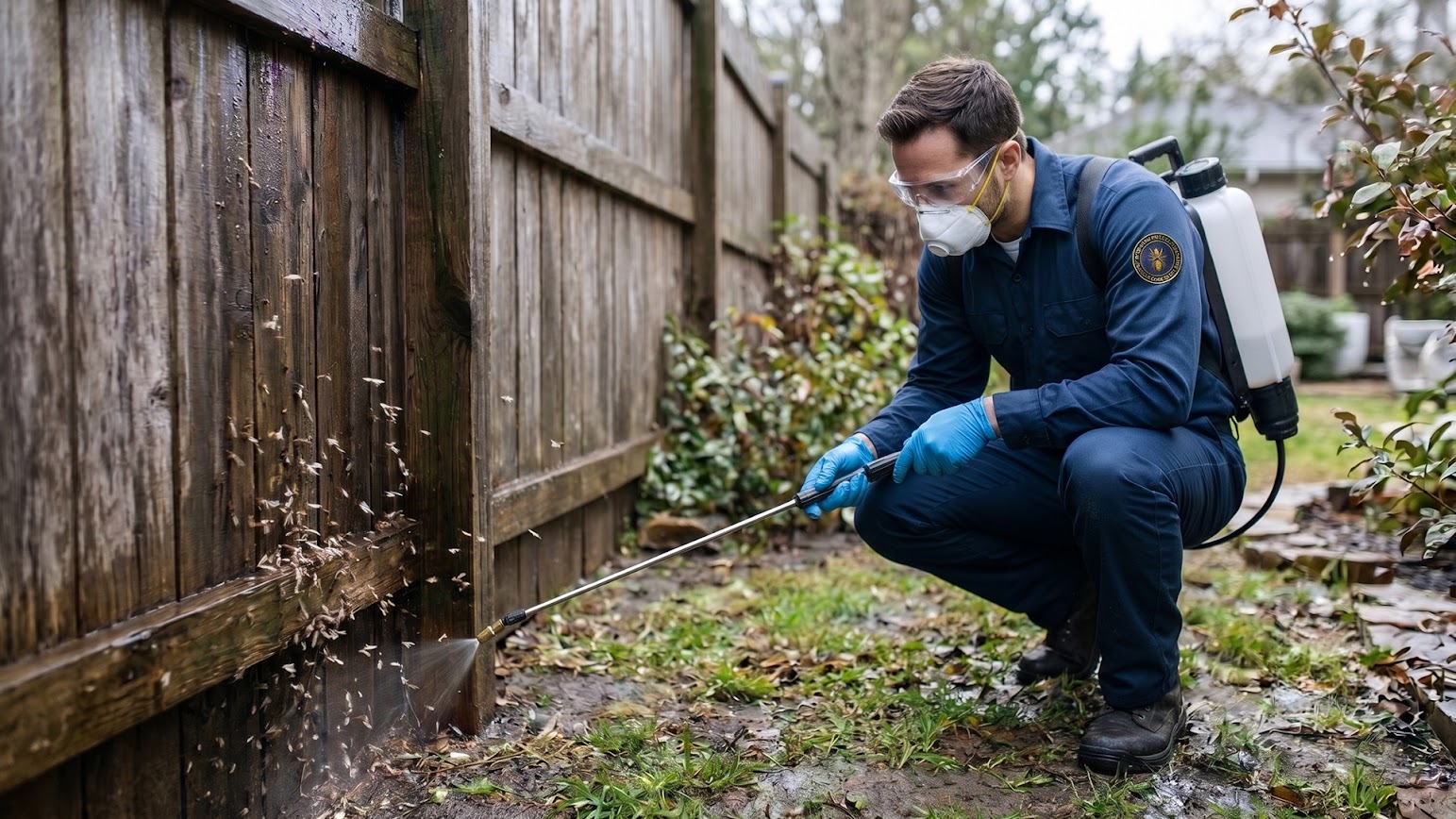
- The yard covering fences, trees, stumps, retaining walls and garden edges
Technicians use tools that see past the surface. A thermal imaging camera picks up temperature changes behind walls while a moisture meter finds damp spots termites favour. Some also use motion or radar detection to confirm live activity without drilling.
You receive a written report at the end. It lists any activity or damage found along with conducive conditions and recommended next steps.
An average home usually takes one to two hours. Booking a termite inspection at least once every 12 months is the approach recommended under Australian Standard AS 3660.2 with more frequent checks in high-risk areas.
Protecting Your Home Through Summer and Beyond
Lasting protection comes from a management system rather than anything you do on swarm night. Inspections find problems early while barriers and monitoring stop new colonies from reaching your timber.
A termite barrier creates a treated or physical zone around the home that termites cannot cross unseen. Chemical soil barriers lose strength over time so it pays to know when yours was last applied.
Check the durable notice in your meter box. It records the termite management system installed when the home was built along with the recommended inspection schedule.
Where activity is found a targeted termite treatment may combine baiting, dusting or foam with a renewed barrier. The right mix depends on the species and where the colony is located.
Keep in mind that most standard home insurance policies in Australia do not cover termite damage. Prevention and early detection are your main lines of defence.
Heading Away for the Holidays?
An empty home over the Christmas break gives an active colony weeks without disruption. Before you leave clear gutters, move firewood away from walls and fix any leaking taps.
Ask a neighbour to check for wing piles near doors and windows after any storms. A quick note from them can save you a nasty surprise when you return.
Why Choose City Pest Control for Termite Inspection and Termite Control
Flying termites after rain are a clear sign that a mature colony is breeding near your home. Telling termites from flying ants and acting calmly on swarm night both help yet only a professional inspection confirms whether termites have reached your timber. City Pest Control is a local family-owned business serving homes and businesses across Canberra and Queanbeyan. Unlike some pest control companies we are licensed to treat termites in the ACT and our state-licensed technicians follow Australian Standards on every job. Each property receives a compliant management plan tailored to its layout and termite risk.
We use the latest products chosen to keep your family and pets safe and we treat every property as if it were our own. Our work is backed by a warranty and our team follows up after each job to make sure you are completely satisfied. If you have seen swarmers at the porch light or noticed any signs of termite activity this summer, contact us to book a termite inspection and protect your home before the damage spreads